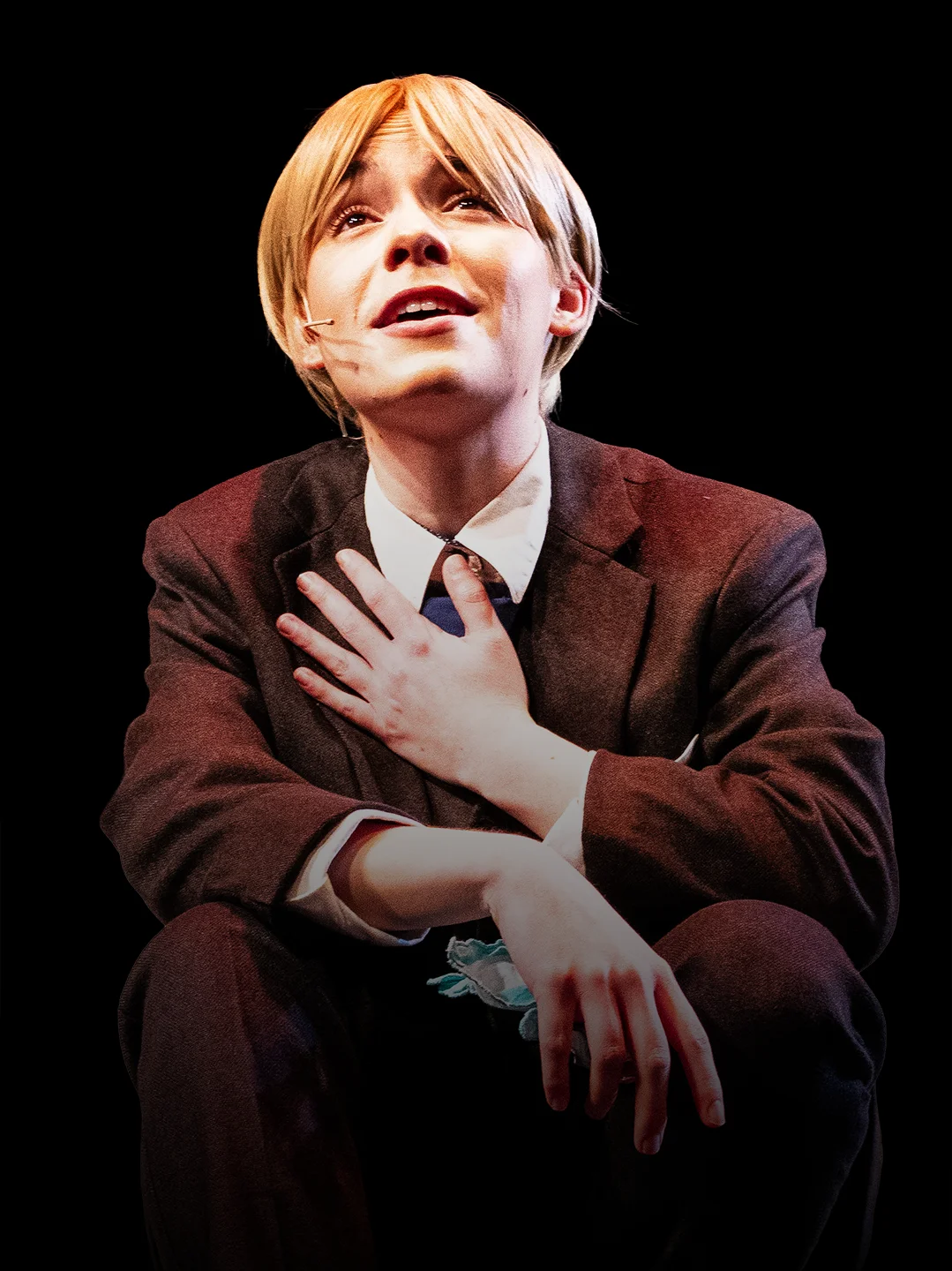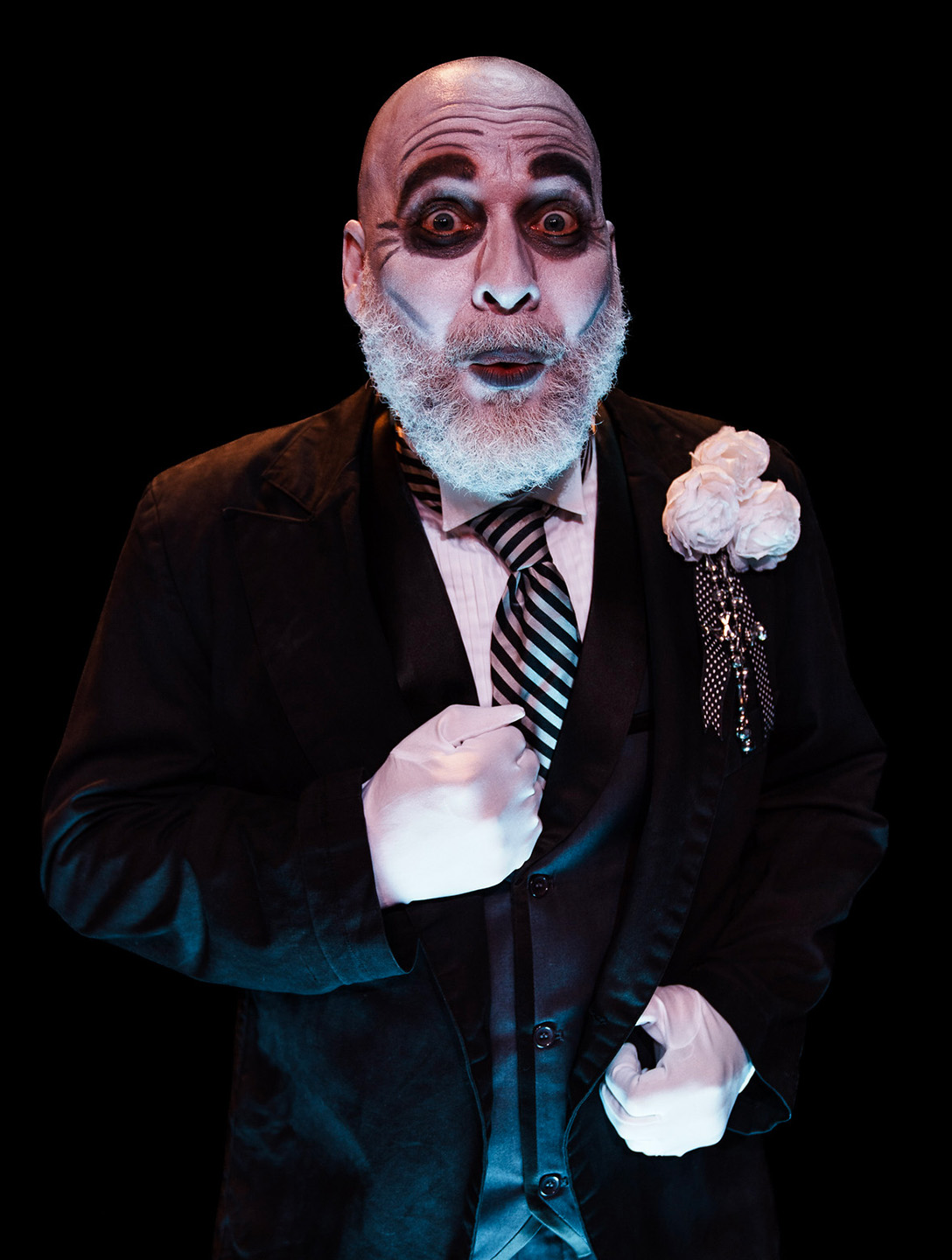
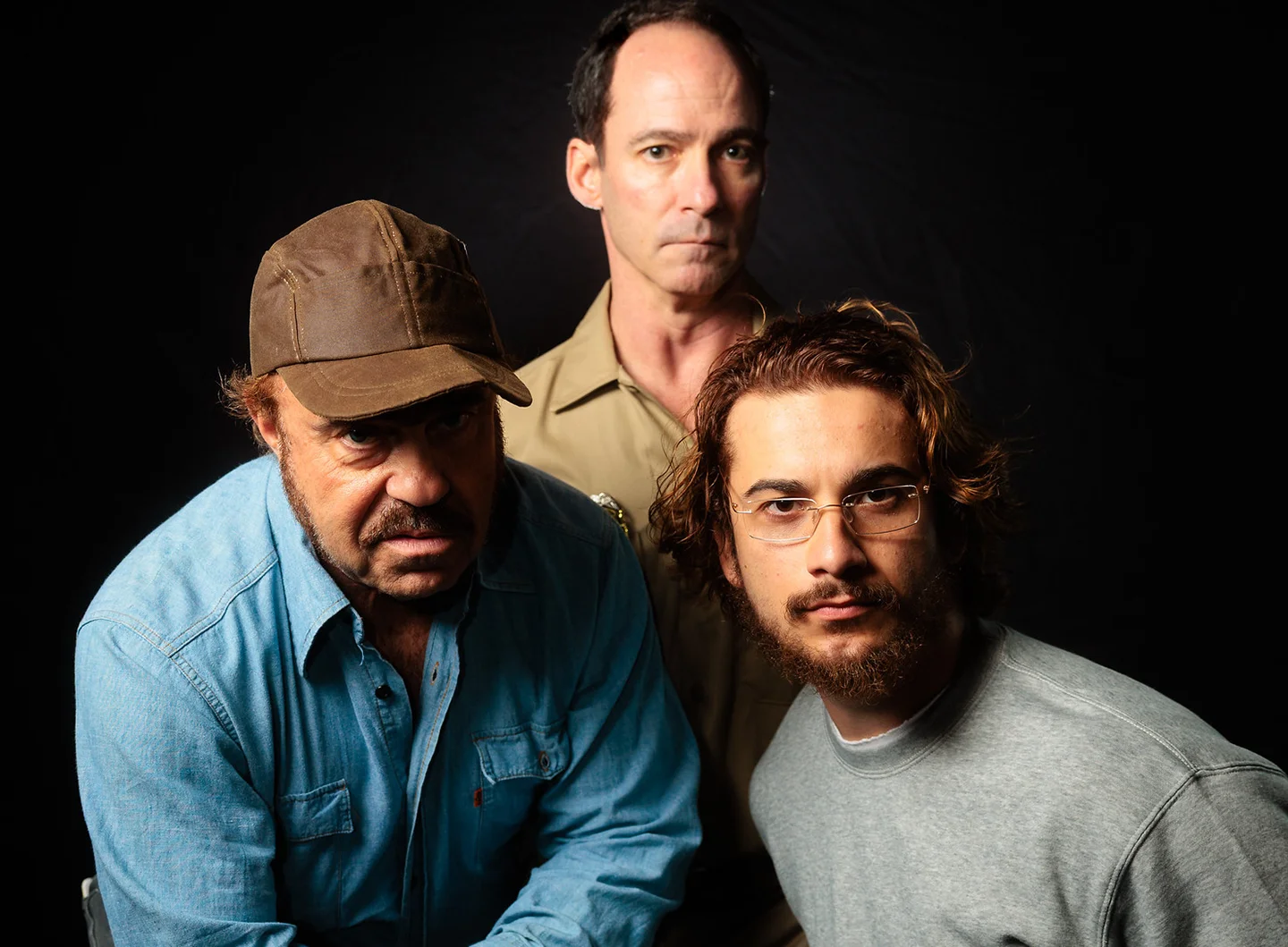
From Director David Jenkins:

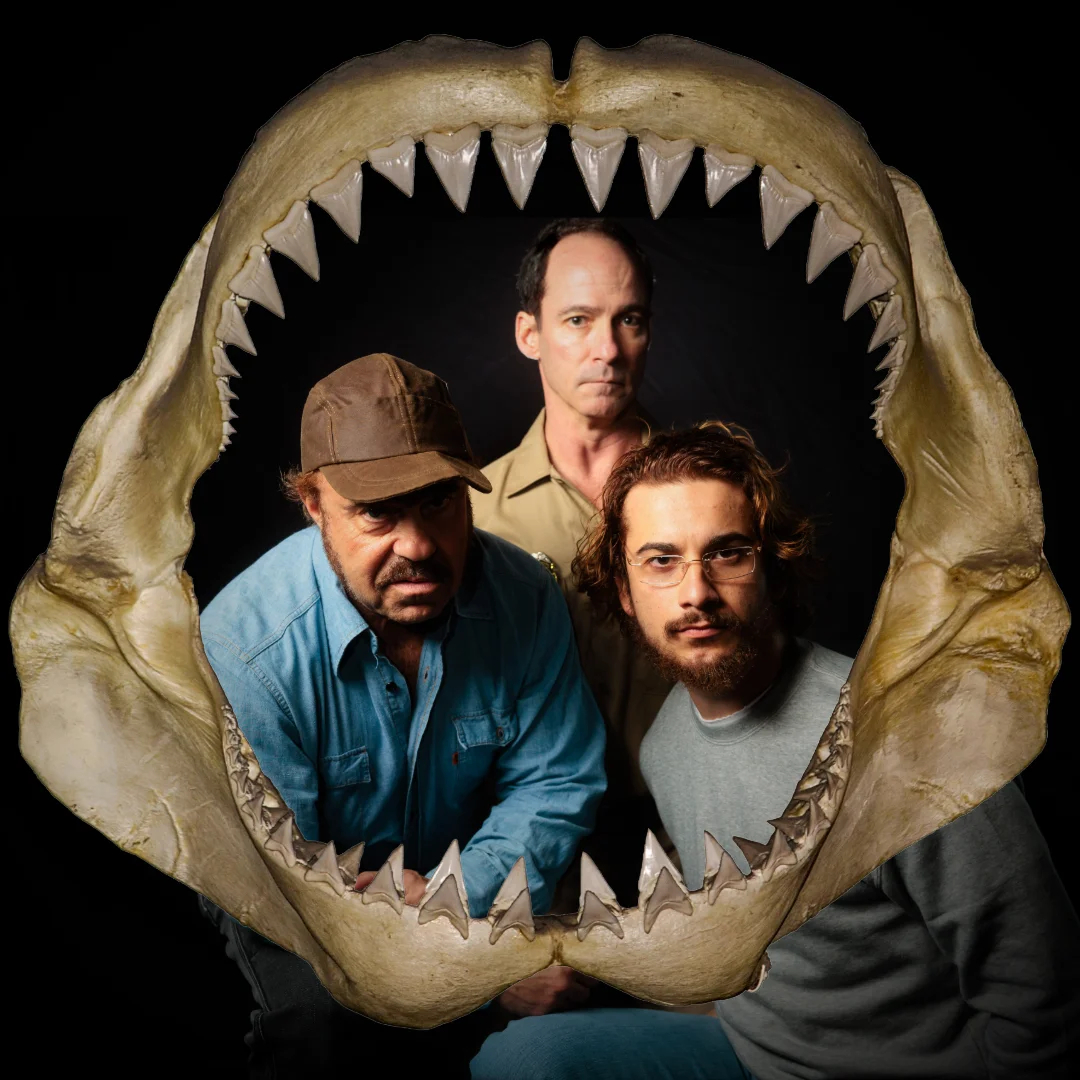
(©2026 James Zambon)
I am so excited for audiences to have the chance to experience this “comedy with teeth” about what is easily one of the great pop culture phenomenons of the past 50 years. I think everyone likely has a JAWS story, I know it freaked me out so bad I refused to get in the water for months and even insisted on sitting in the dead middle of any boat wearing a lifejacket for even longer.
I am lucky to have had the chance to direct this play and work with the three damn-fine men on bringing it to life. Paul is one of my oldest and dearest collaborators and I’ve thoroughly enjoyed what both Cody and Chris have brought into this room and just feel certain that you will, too.
I think it important to note two things about this production that may be valuable to the viewer. The first is that we have very intentionally chosen to not go so far with impersonating any of these icons in such a way that would feel two-dimensional.
We all agreed that there was a line we could walk between nailing certain mannerisms of the performers (not their characters in JAWS since this play happens when the cameras aren’t rolling) without it becoming an inflexible trap, I did not want to put what I know to be 3 very talented actors into too much of a straightjacket.
I saw the New York production and while I mean absolutely zero disrespect, I felt like the choice to dig so deep into impersonation and play purely for laughs cut a bit too much of the heart that truly beats inside this play just a bit too much for my taste (oh boy I hope I don’t get Chalamet-ed over that, I am not knocking a choice just saying it wasn’t mine and isn’t that a beautiful thing about theater?).
The other thing I would want folks to know is that this isn’t just some play about a movie, I find it so much more than that. It is also a love-letter to the acting profession, it is a play about fathers and sons, it is a play about male friendship. Ian Shaw said it is a play about love, and he’s not wrong there, either.
I strongly feel like there is a lot to fall in love with here, even if you never saw the movie the play is based on.

What follows here is from a New York Theater Guide article written by Sarah Rebell in advance of the New York premiere:
Sink your teeth into the lore behind the filming of Steven Spielberg’s blockbuster, which inspired this play about the tension between the three lead actors.
Shark attack! Most people would be scared stiff to hear those chilling words while out on the water. But for actors Richard Dreyfuss, Roy Scheider, and Robert Shaw, news of a shark’s “cardiac infarction” struck even more fear and dread.
The shark in question was a mechanical prop shark used during the 1974 filming of the legendary Steven Spielberg movie Jaws. As depicted in the Broadway play The Shark Is Broken, the shark frequently broke down during the long days of filming on the open water. It could take hours for the prop to be fixed (or a new one sent out), leaving the actors virtually trapped on a small boat for hours, tensions and tempers rising with each delay.
This “amusing behind-the-scenes comedy,” co-written by actor Ian Shaw (son of Robert Shaw) and Joseph Nixon, explores the squabbles and bonding between the actors while they’re literally and figuratively left at sea during filming delays. It also offers juicy behind-the-scenes glimpses of what it was like to create one of the most iconic movies of all time — which surely wasn’t smooth sailing.
While you don’t need to be a connoisseur of the film to enjoy the play, there are plenty of Easter eggs and references for fans to appreciate. Refresh your memory by diving into some Jaws trivia …
Who starred in Jaws?
Directed by Steven Spielberg and based on the novel by Peter Benchley, the beloved thriller tells the story of three men determined to hunt down the shark whose attacks plague a summer resort town.
The main characters are police chief Martin Brody (Roy Scheider), marine biologist Matt Hooper (Richard Dreyfuss) and shark hunter Sam Quint (Robert Shaw). None had achieved major Hollywood fame yet; in order to enhance the horror of the film, the creators wanted the audience to feel like the shark attacks could happen to ordinary people like them, not big movie stars.
The play references Spielberg’s casting decisions, with Scheider suggesting that perhaps the production team chose not to go with famous Hollywood stars “for reasons of realism.”
Roy Scheider
Although Scheider had appeared on Broadway and in a few films before Jaws (including The French Connection, which earned him an Oscar nod), the movie was his breakout role. He repeated his performance as Brody in the 1978 sequel Jaws 2 and also starred in Marathon Man and All That Jazz.
Richard Dreyfuss
Dreyfuss, too, was primarily a stage performer prior to Jaws. As depicted in Shark, he had just started to get film roles (including in The Apprenticeship of Duddy Kravitz) when Spielberg cast him. Just three years later, he won the 1978 Oscar for Best Actor for his performance in The Goodbye Girl. At the time, 30-year-old Dreyfuss was the youngest actor to ever receive the honor.
Robert Shaw
Quint was the most notorious character in the Jaws trio, so it makes sense that actor Robert Shaw has a powerful presence. Shaw was a well-known Shakespearean actor in England who had appeared in productions of Macbeth, Cymbeline, Othello, Much Ado About Nothing, A Midsummer Night’s Dream, Hamlet, and more. He frequently references his Shakespearean background is frequently referenced in Shark.
Shaw also starred in film adaptations of two Pinter plays – a fact that leads him to play a practical joke on Dreyfuss, who wants to work with the playwright, in Shark. By the time he filmed Jaws, Shaw had already received an Academy Award and Golden Globe nomination for his portrayal of King Henry VIII in the movie A Man for All Seasons.
Why did the Jaws shark keep breaking?
The fourth star of the film is Bruce, the name given to the three mechanical sharks who played the title role. The Jaws crew reportedly named the great whites after Spielberg’s lawyer, Bruce Ramer. (The 2003 animated film Finding Nemo later named its shark character Bruce in homage to Jaws.)
As Scheider notes in Shark, Bruce was powered by pneumatics (air), not hydraulics (liquid). “Because oil and water don’t mix,” he tells Dreyfuss. Part of the reason why Bruce kept breaking down was because he had initially been tested in fresh water. But the ocean around Martha’s Vineyard, where the movie was filmed, was salt water. That saltwater kept corroding both the inside and outside of the mechanism, causing the shark to sink.
Even so, it was of course easier than using a live shark. When the New York City-bred Dreyfuss wonders why they couldn’t have tamed a shark for the film, Scheider retorts, “Whattya gonna do? He eats someone, he gets a tap on the nose; he doesn’t eat someone, you give him a cookie?”
Did the Jaws actors know they were making a hit?
Jaws went down in history as the first summer blockbuster, but, at the time, the actors had no idea that the movie would become such a sensation. As Robert Shaw snaps in Shark, “Do you really think people are going to be talking about this in 50 years?”
The first film to be shot on open water and not in a tank, Jaws was a risky and expensive one to make. As the actors discuss in Shark’s opening scene, they were already over the original $4 million budget – by an additional $2 million! The fact that Bruce kept breaking down and causing additional scheduling delays did not help matters.
Ultimately, Jaws cost $9 million to make but brought in $476.5 million at the box office. Adjusted for inflation, that would equal more than $1.1 billion today. No wonder it was the highest-grossing movie of its time (until Star Wars debuted a few years later).
Famous Jaws moments in The Shark Is Broken
The play focuses on behind-the-scenes antics more than the plot of Jaws, but there are plenty of references to the best-known parts of the original movie. Here are a few to watch for.
The Orca
[The] entire set is a replica of the Orca: the boat on which Brody, Hooper, and Quint spend days on the open water trying to catch the shark. Their plan is to hook it to large, buoyant yellow barrels and make it float.
The Jaws score
You sadly won’t hear John Williams’s Oscar-winning thriller score, but you’ll still get its chilling vibe. [Edited to add: Jobsite composer Jeremy Douglass has something very special in store for Tampa audiences at both the start and finish of the show sure to give fans chills]
“You’re gonna need a bigger boat.”
Those hoping to hear the most iconic line from Jaws won’t be disappointed — but Scheider says it to Shaw and Dreyfuss in a different context than his film character does. In Shark, Scheider says “you’re gonna need a bigger boat” in reference to the size of Shaw’s family.
Scheider goes on to clarify that he did not, in fact, come up with the line himself, giving credit to Spielberg instead. “But I nailed it!” Scheider proudly adds. He certainly did.
The U.S.S. Indianapolis speech
One of the most striking moments in the play is when [Shaw] performs the iconic U.S.S. Indianapolis speech. The monologue reveals he was a survivor of the deadliest shark attack in history, explaining the trauma that fuels Quint’s hatred for sharks and his gruff persona.
During World War II, a naval ship sank in shark-infested waters. The 900 passengers had to tread water for days as they tried to avoid the surrounding sharks, but only 316 survived. Robert Shaw himself wrote part of the speech, which he volunteers to do during Shark.
In real life and in the play, Shaw was often so drunk that he was initially unable to film the monologue. The Shark Is Broken shows Shaw struggle with this failed take, which makes the final version (delivered [at] the end of the play) even more powerful.
 Richard Dreyfuss
 Robert Shaw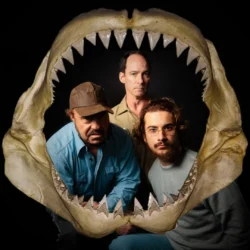
We’ll also add to that Quint’s bat, Brody’s cigarette, a certain fish-hook finger bit from Dreyfuss, and a few sing-along moments among others you might want to watch out for.
THE SHARK IS BROKEN is on stage at Straz Center through Apr. 5. Tickets start at $44.50 and increase by date based on demand. Currently the lowest prices may be found for Mar. 11 and 20 at 7:30pm and Mar. 21 at 4pm.