Some folks like a primer or synopsis for a show, other folks like to walk in blind. For some, having a firmer grasp of the plot when it comes to Shakespeare helps them follow along when they find the language “tricky.” Or maybe you wanna know why we’re doing what we’re doing with it. This post should cover you!
A good thing, we think, in the case of THE COMEDY OF ERRORS and something we feel is important to underscore about this one in particular is that the language nor the plot is exactly that complex compared to many of the “heavy hitters” and we’ve gone out of our way to create a production that you could “turn the volume all the way down on” and still easily follow and enjoy at the level of physical humor. This is also to say, if you find yourself confused as to who is who — that’s intentional! 😀
If you’d like the TL;DR: on what’s going on in the show, this part is going to be for you:
Twenty-five years before the play begins, Egeon, a merchant of Syracuse was traveling home on a boat with his wife, Emilia, their identical twins, and another set of identical twins that Egeon took in to be his twin sons’ servants. Egeon looked at the clouds, thought there was going to be a storm and panicked. The crew panicked and abandoned ship, leaving Egeon, one son and his servant tied to one mast, and his wife, the other son and his servant tied to the other.
But no storm came.
In calm seas, with no one at the helm, the boat drifted serenely in to a rock and was split in two. And so was the family.
Years later, the boys who floated with Egeon, in grief, naming themselves after their lost twins, set off, from Syracuse, in search of them. Some years after that, Egeon sets off in search of the searching brothers. In Ephesus, years in to his search (and when our play actually begins!), Egeon is arrested as an illegal alien and sentenced to beheading. He tells his extraordinary tale to the Duke, who to everyone’s surprise, pities the hapless Egeon and commutes his sentence until sundown, in order that he find someone in Ephesus that might help him … And now our play is off to the races!
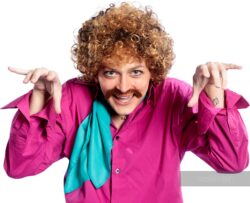 What happens next takes place in the course of a day, when, miraculously, Egeon and both sets of twins end up in the same town on the same day. Then, as they say, the hi-jinx ensue! It’s a madcap race against the clock featuring desperate housewives, smitten sisters, saucy kitchen wenches, jewelry deals gone sideways, run-ins with local law enforcement, and an appearance by a magician who doubles as an exorcist!
THE COMEDY OF ERRORS is an excellent introduction to Shakespeare, offering a fast-paced, funny story that doesn’t demand a deep understanding of Elizabethan language or “ancient” culture to enjoy. It’s a pure celebration of comedy through confusion, proving sometimes the greatest laughter comes from life’s most tangled misunderstandings.
Additional notes on the production you might find valuable:
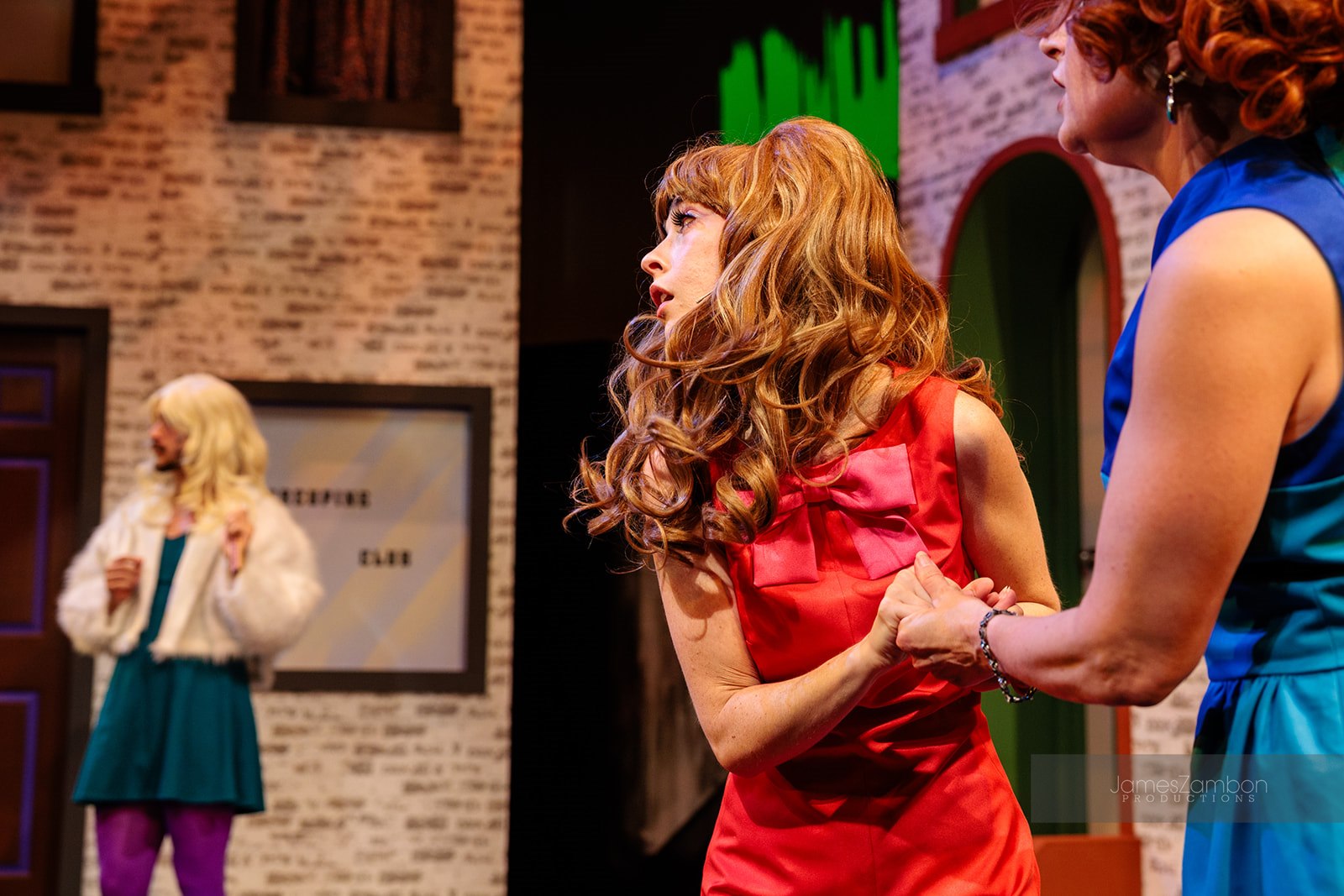
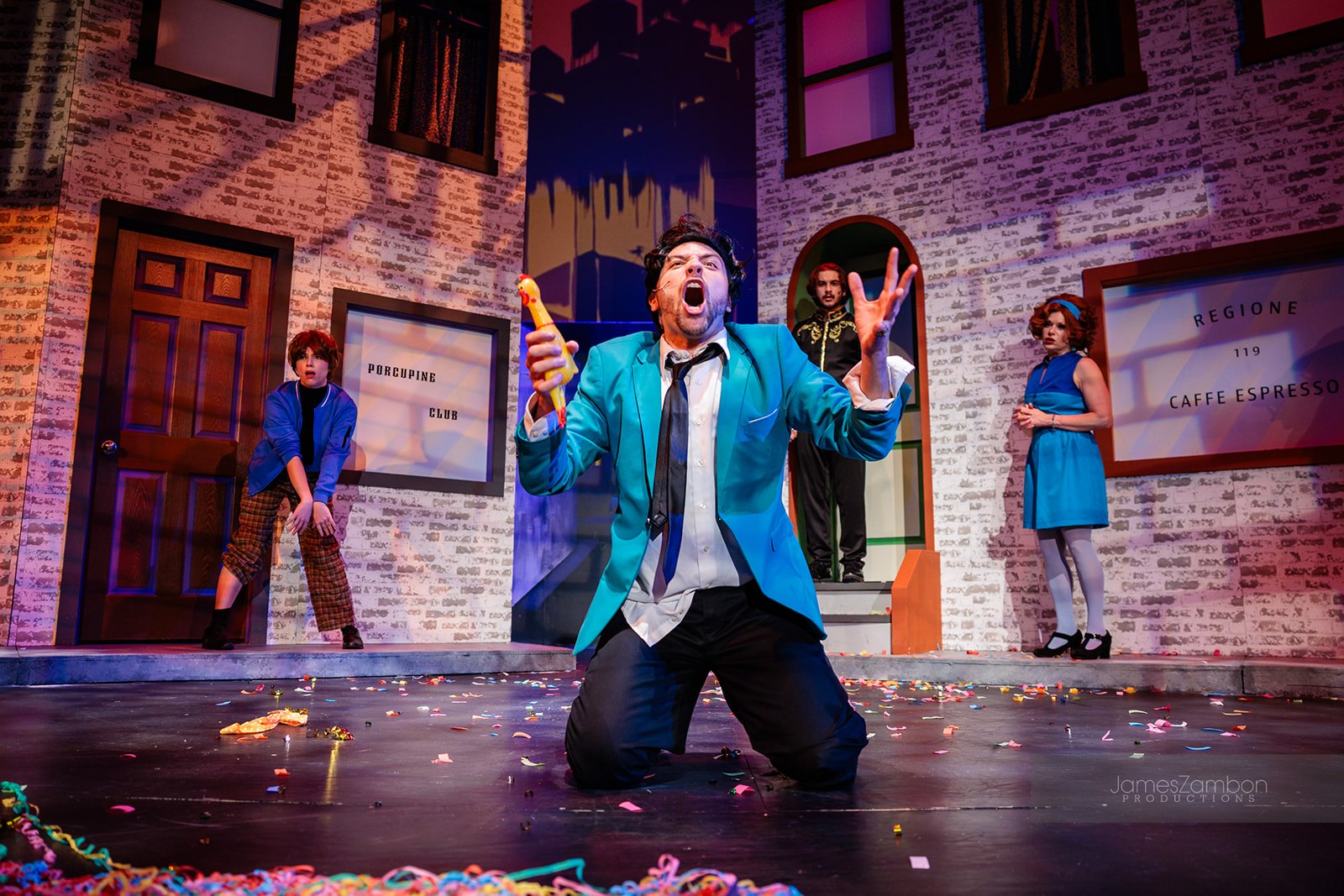
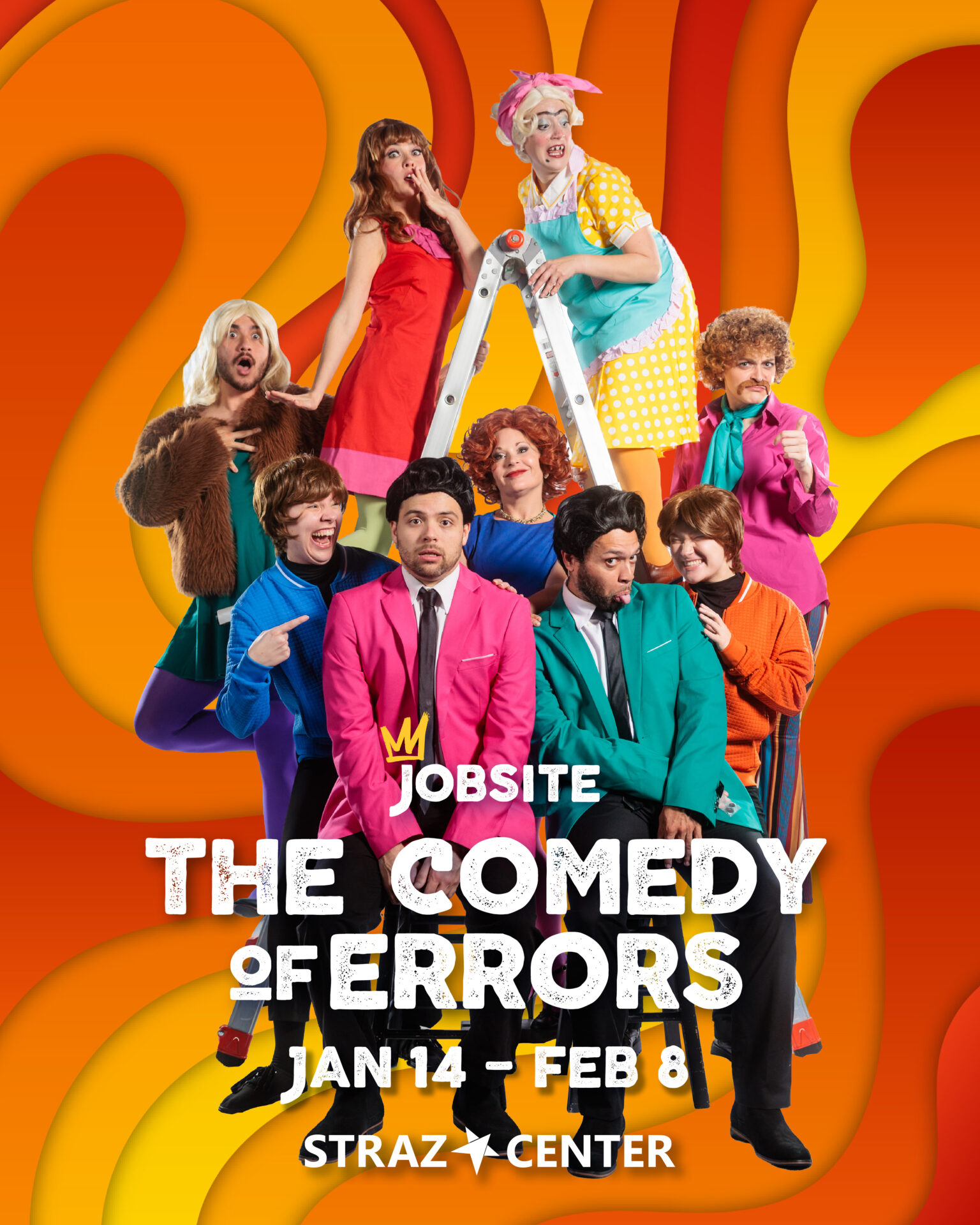
 We always say “you have to set Shakespeare somewhere and the last thing a modern American audience wants to watch is us doing these things in tights and frilly collars.” We chose to set this one amid the jazz-and-beatnik vibes of the 1960s in a spot that might feel more than a little bit like Greenwich Village even as we’ve left it Ephesus.
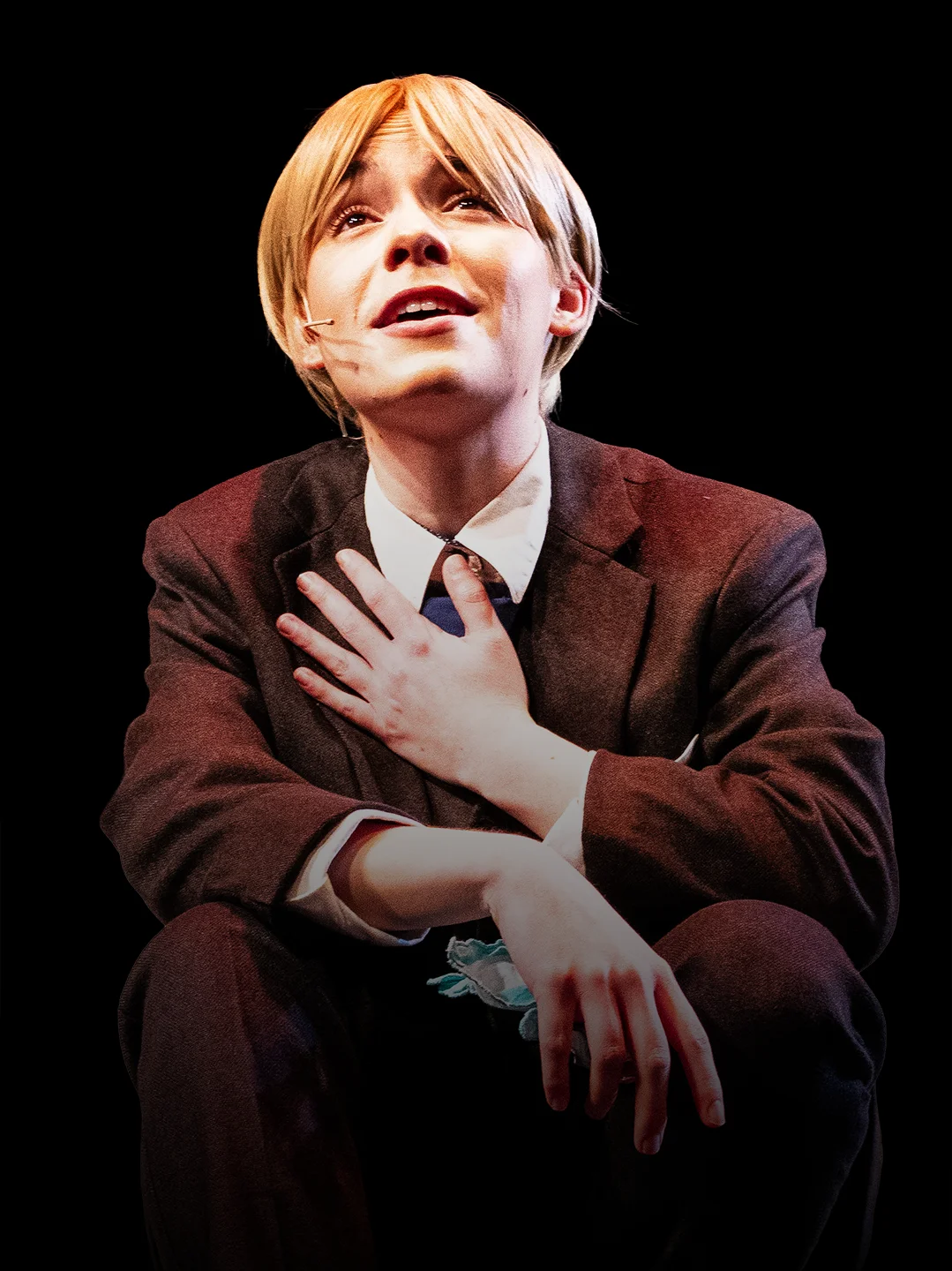
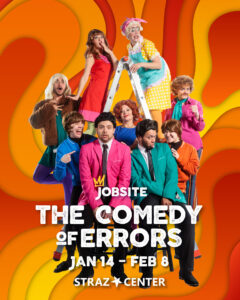 Composer Jeremy Douglass first brought the jazz trio and beat poetry rhythms (here’s a Spotify list of house music) — who saw So I Married an Ax Murderer? — to the table that were yes-anded by set designer Chris Giuffre’s inspiration from a mural he had previously designed, and then again by director David Jenkins who was inspired by ’60s fare like Rowan & Martin’s Laugh-In, The Carol Burnett Show, The Smothers Brothers Comedy Hour, even a little Bewitched, Gilligan’s Island and The Flying Nun (wait for it …). Costumer Katrina Stevenson has tied all this together in her classic ’60s fits, from bowl cuts to Sgt. Peppery uniforms.
We’re doing the show with an ensemble of just 9 actors (Shakespeare would have done it with at least 13), meaning several of them are playing MANY different parts, which we’ve dug into the sitcom/comedy show feel of that to highlight the silly and acknowledge the absurdity of so many quick changes.
Speaking of absurdity, we know our Antipholuses (Antipholi?) and Dromios don’t look exactly like identical twins nor do they act exactly the same, they’re just wearing the same clothes. This is also by design to better help the audience follow along and to keep underlining the absurdity of the whole thing.
A lot is made of “drag” these days but we’ve also tried to return to a “simpler” time when maybe we were just allowed to laugh at a man in a dress or a lady in a mustache as literally the whole country did with Flip Wilson or Vicki Lawrence. This is all silly for silly’s sake, so please leave the culture war at the door.
But, what does it all MEAN!
We’re honestly not trying to get all too deep here. But, ok, you’re looking for more to chew on than just some laughs? The play does have a lot to say about materialism, we think that part still matters. Pay attention to all the talk about money, commerce, status symbols, ownership, wealth and debt. The exchange of goods and money drives the plot. Things are more important than ideals or values. Make of all that what you will, but the commentary is right there for the taking.
We think the play also has neat things to say about our distorted perception of reality. Often, our flawed perceptions cause harsh real-world consequences that we don’t even recognize. Now, this is a silly comedy so everything works out just great but there is a lesson to learn under there. But, to be 100 we’re really just hoping you’re along for the ride and laugh a lot.
THE COMEDY OF ERRORS is on stage in Straz Center’s Jaeb Theater Jan. 14 – Feb. 8, 2026. Book tickets here!